Orbital
Probability clouds
Orbital_1_frontal
Orbital_1_1

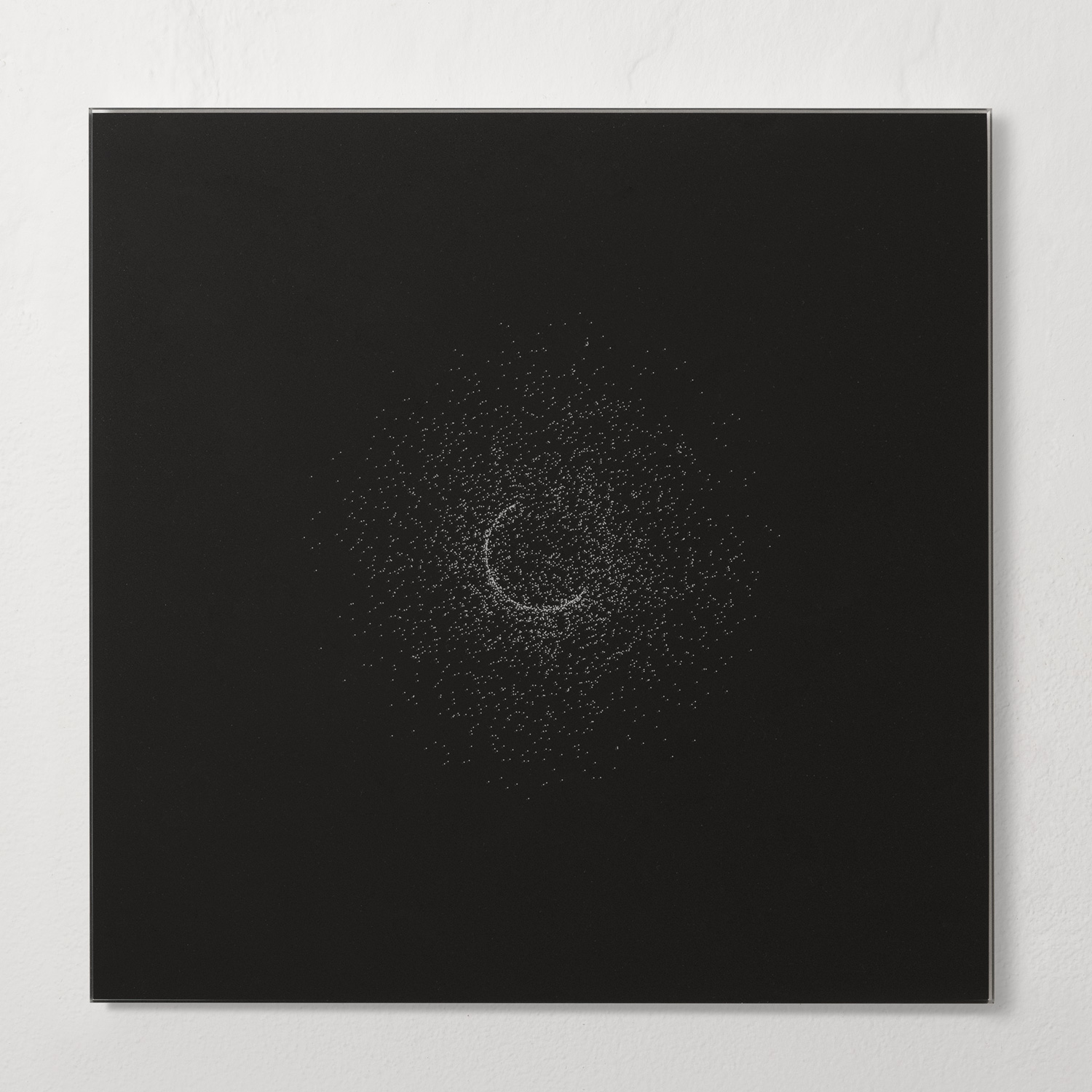
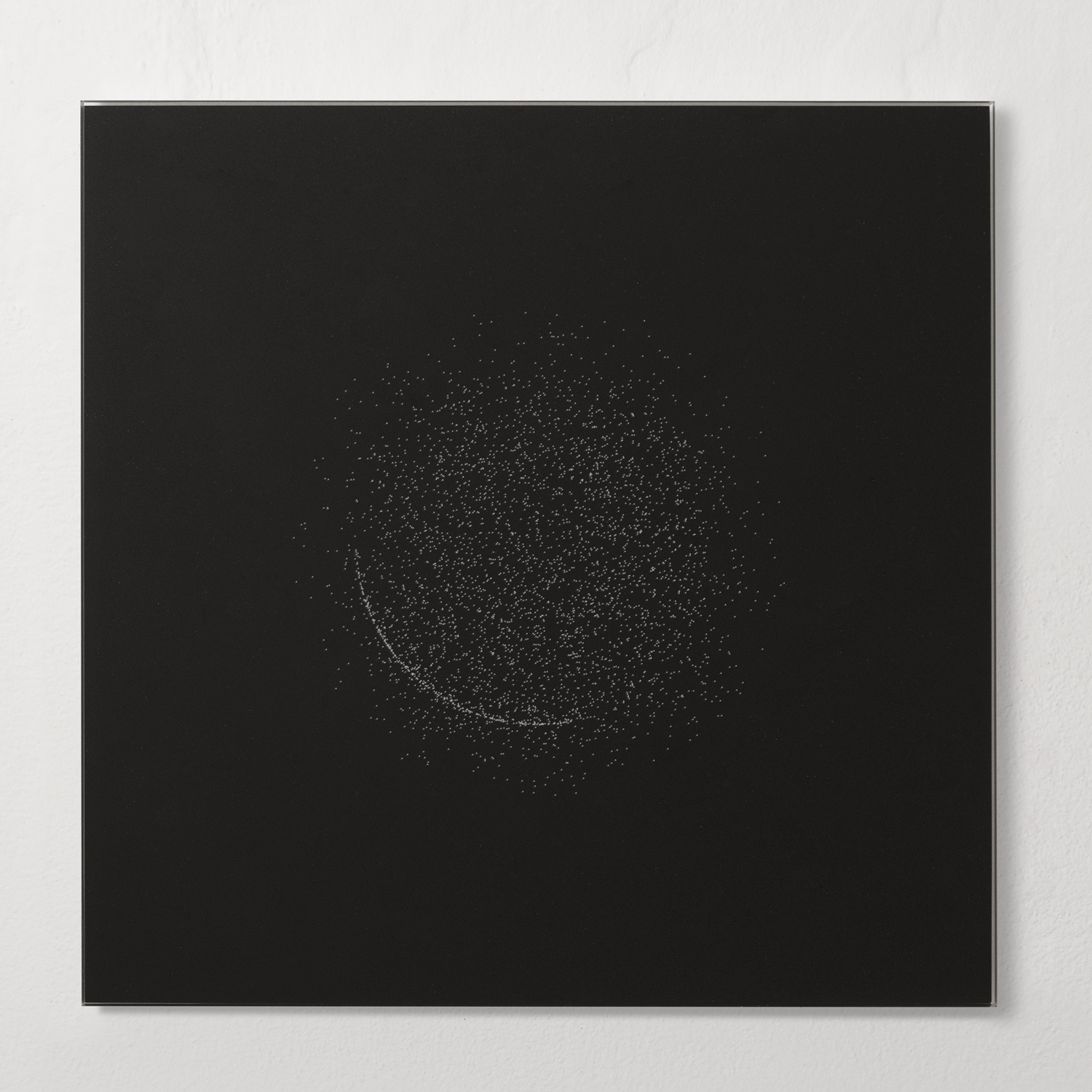
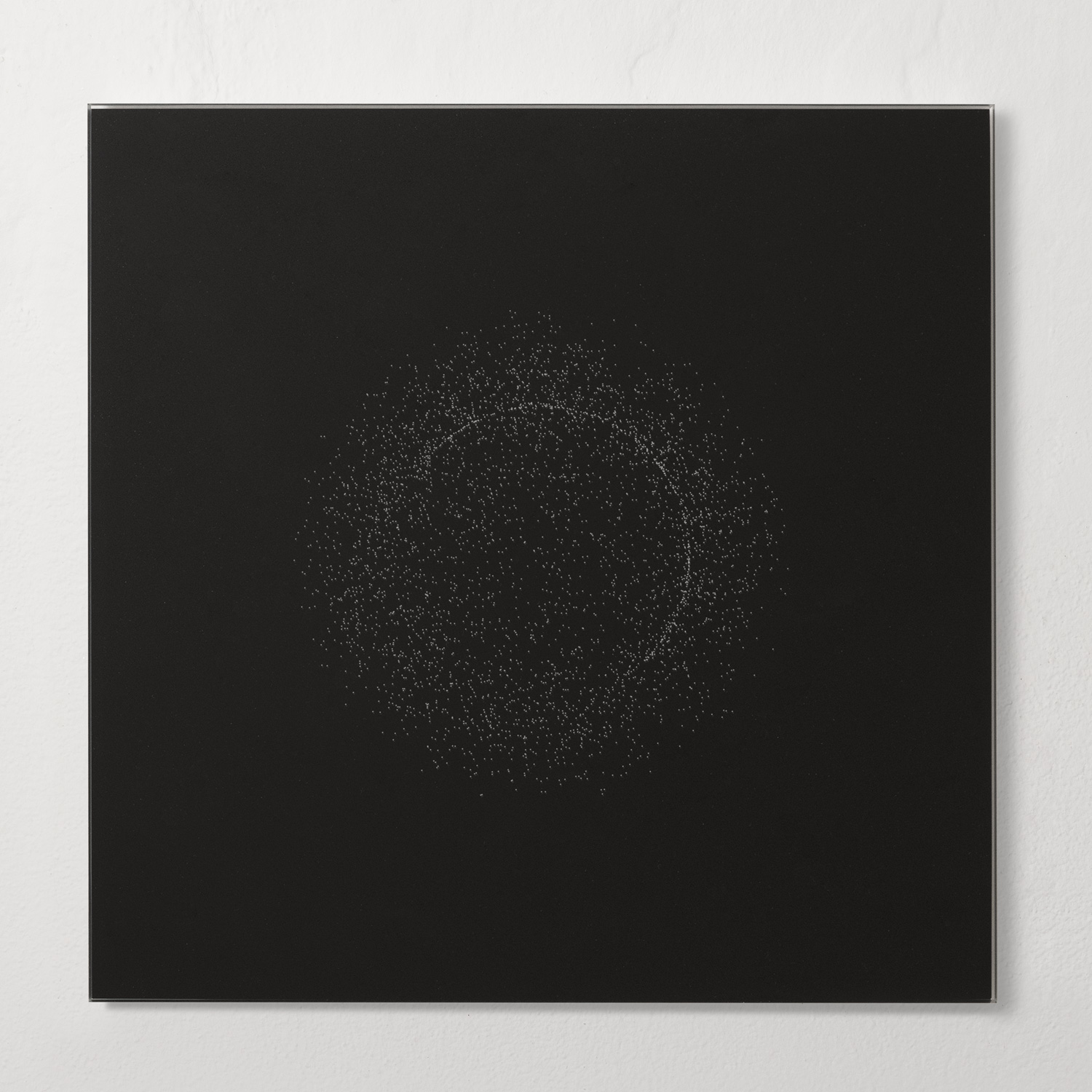
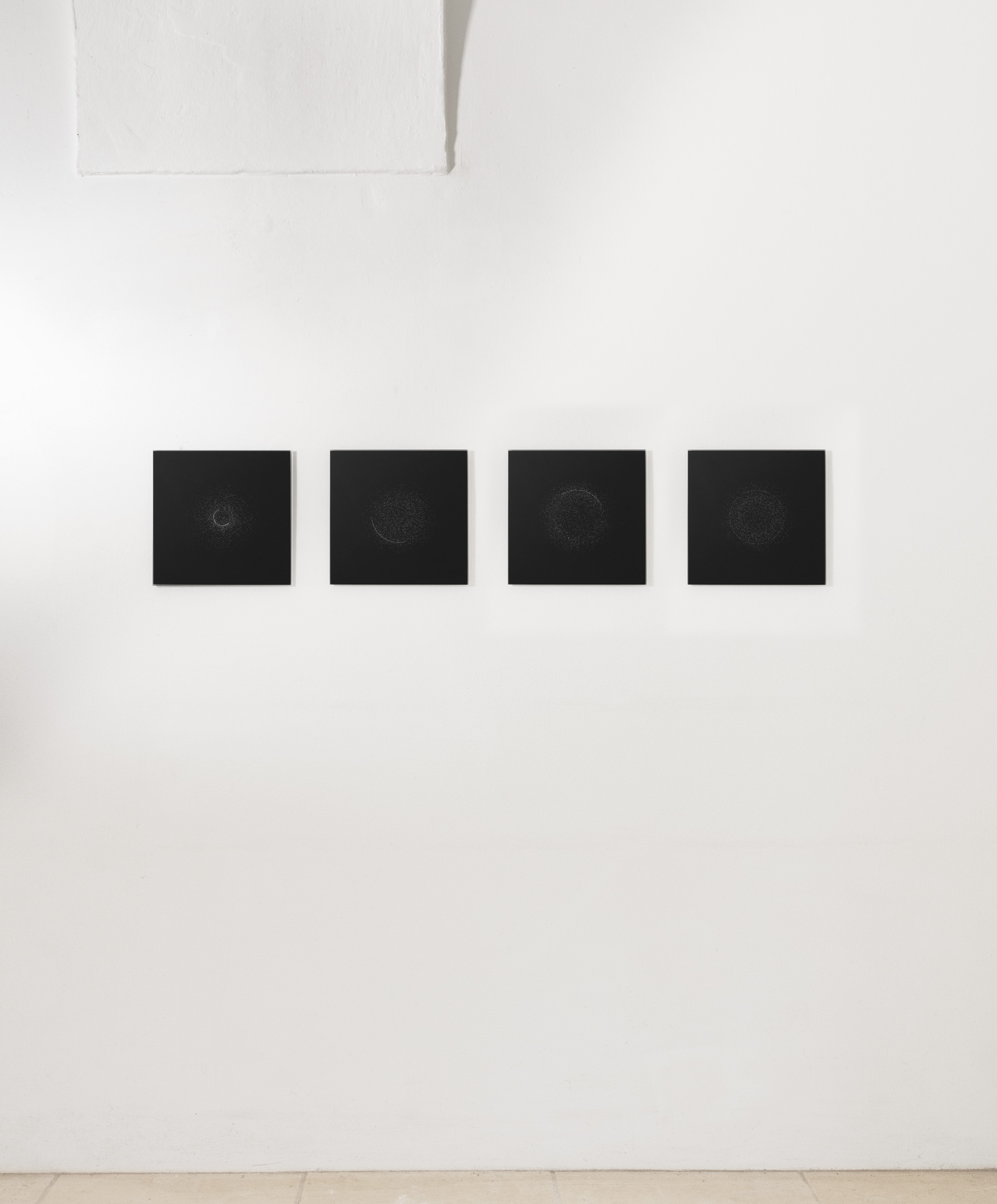
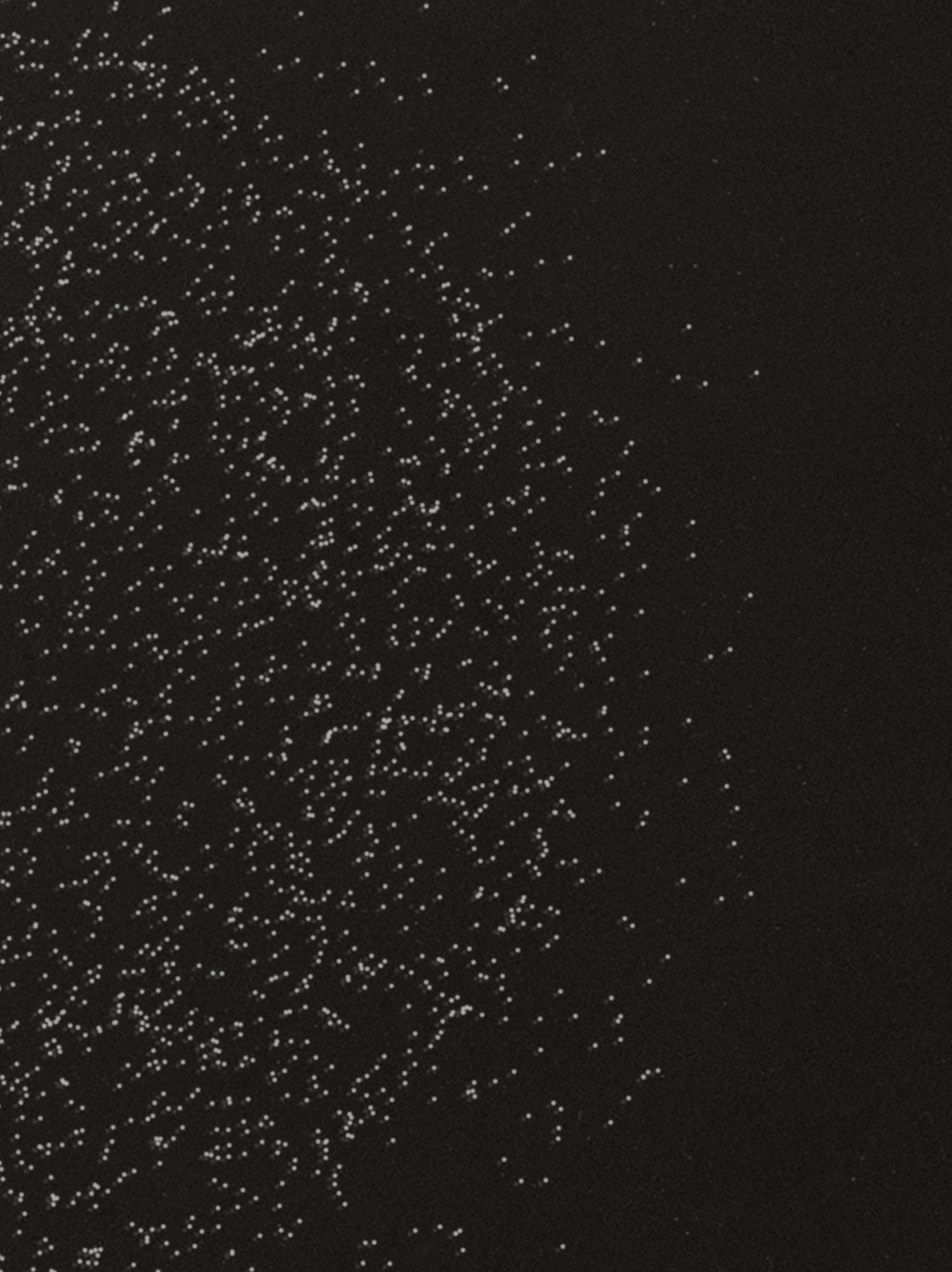
"Orbital 1" and "Orbital 7, 5, 3, 6", Engraving on black mirror glass, 35 × 35 cm, 2025
Orbital_Socialmedia_1080x1440_9_250704
Orbital_2_frontal_

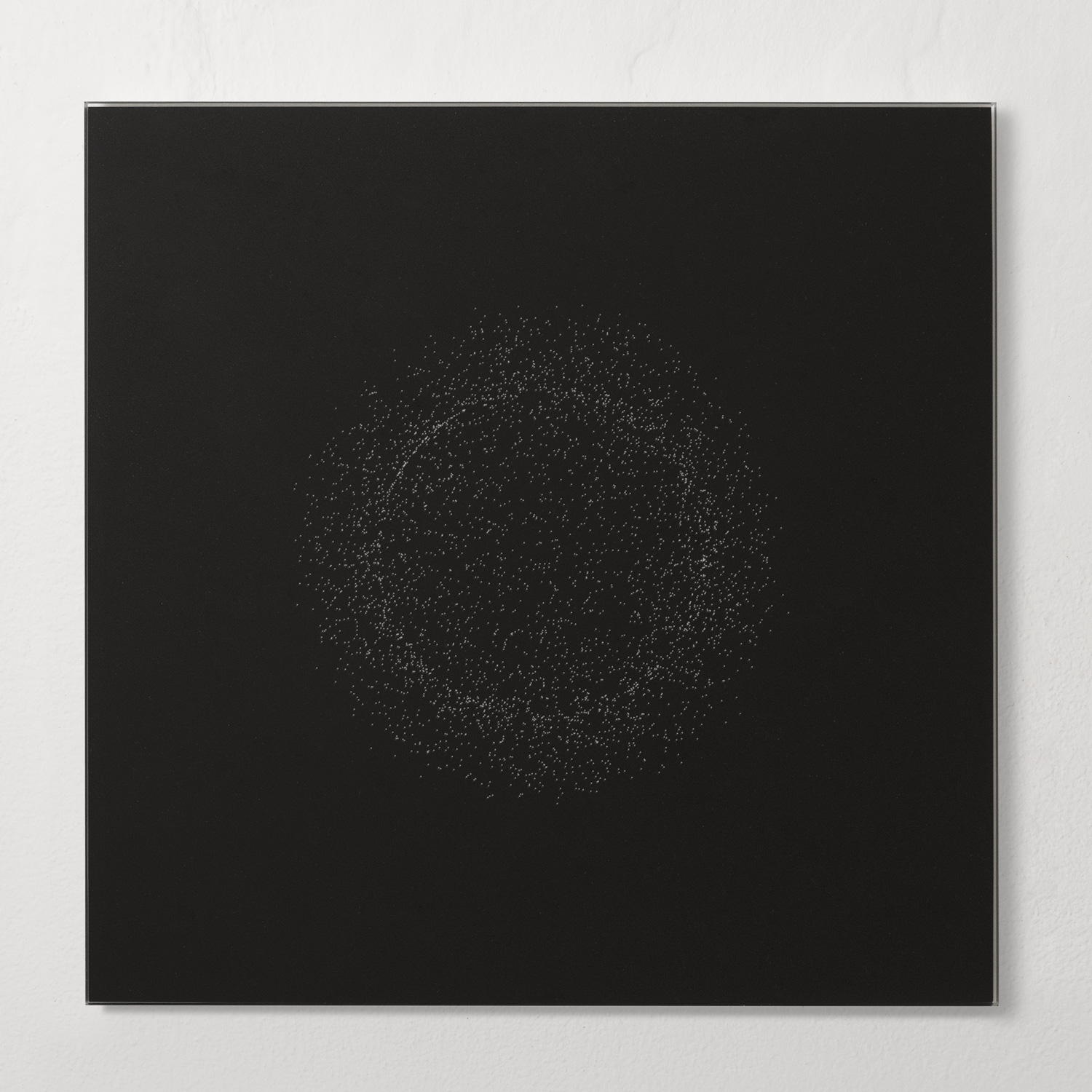
"Orbital 2", Engraving on black mirror glass, 35 × 35 cm, 2025
Orbital_Wall_
Orbital_7_frontal_
Orbital_5_frontal-2
Orbital_6_frontal_

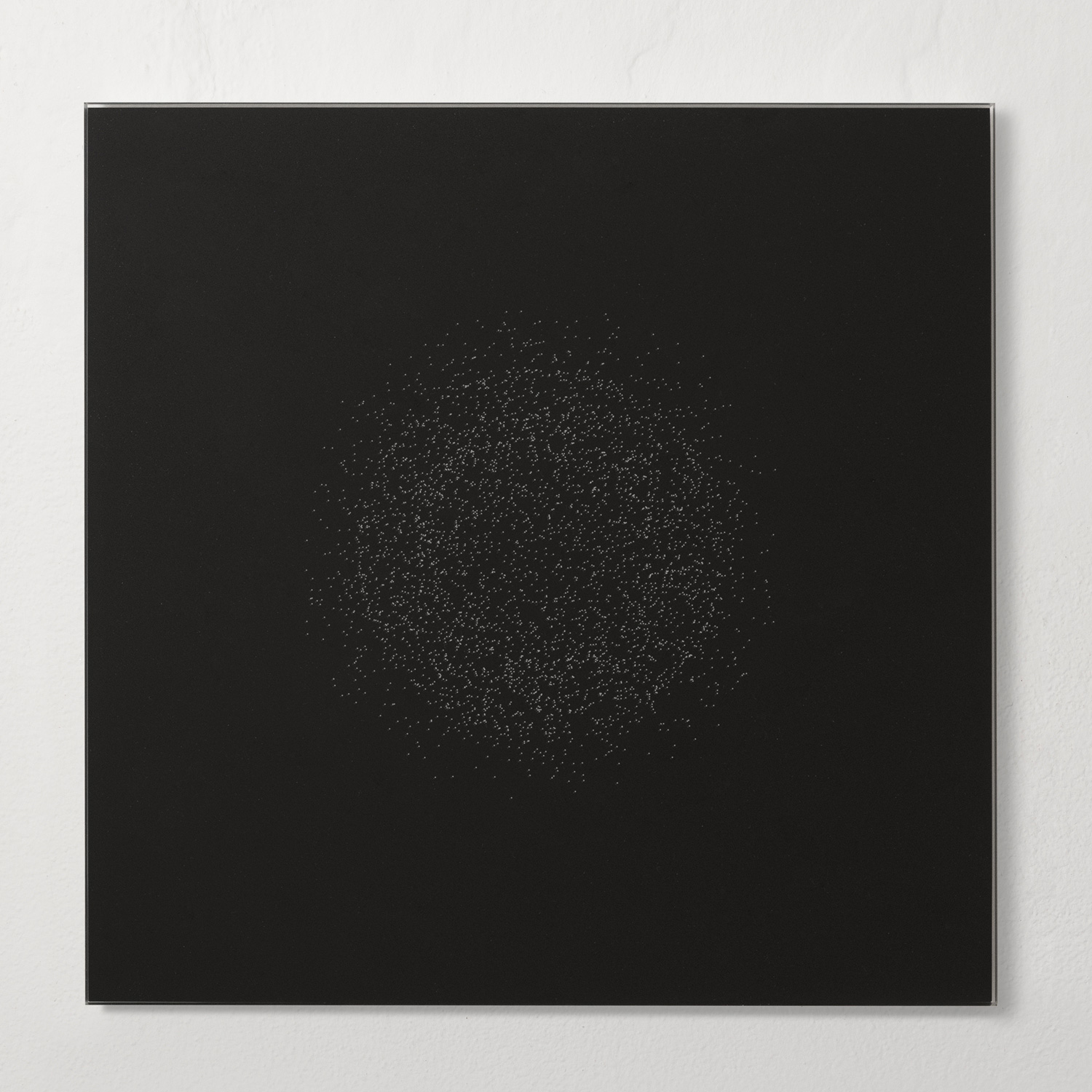
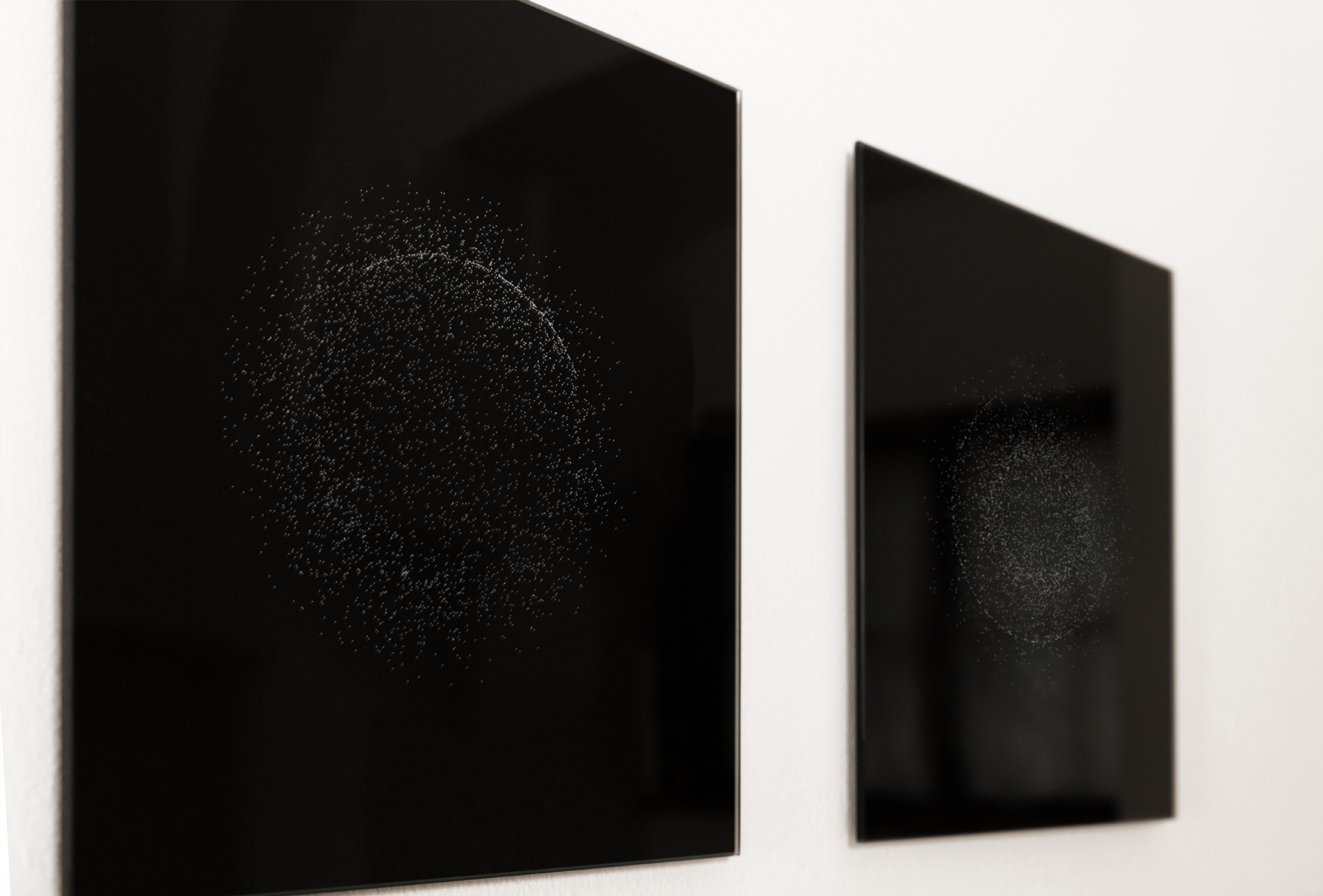
"Orbital 7, 5, 6" Engraving on black mirror glass, 35 × 35 cm, 2025
Orbital_Object_1
Orbital_Object_2
Orbital_Object_3

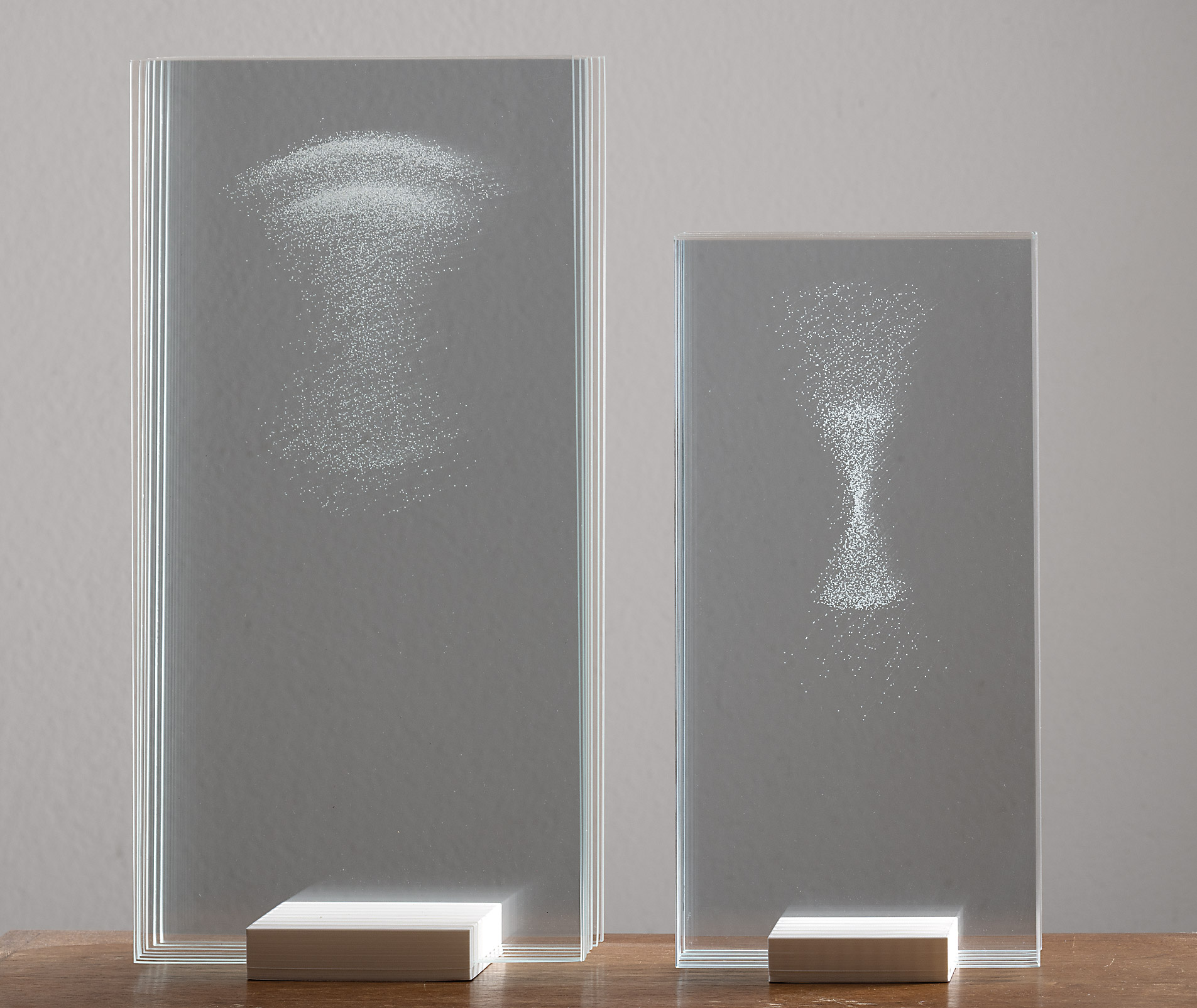
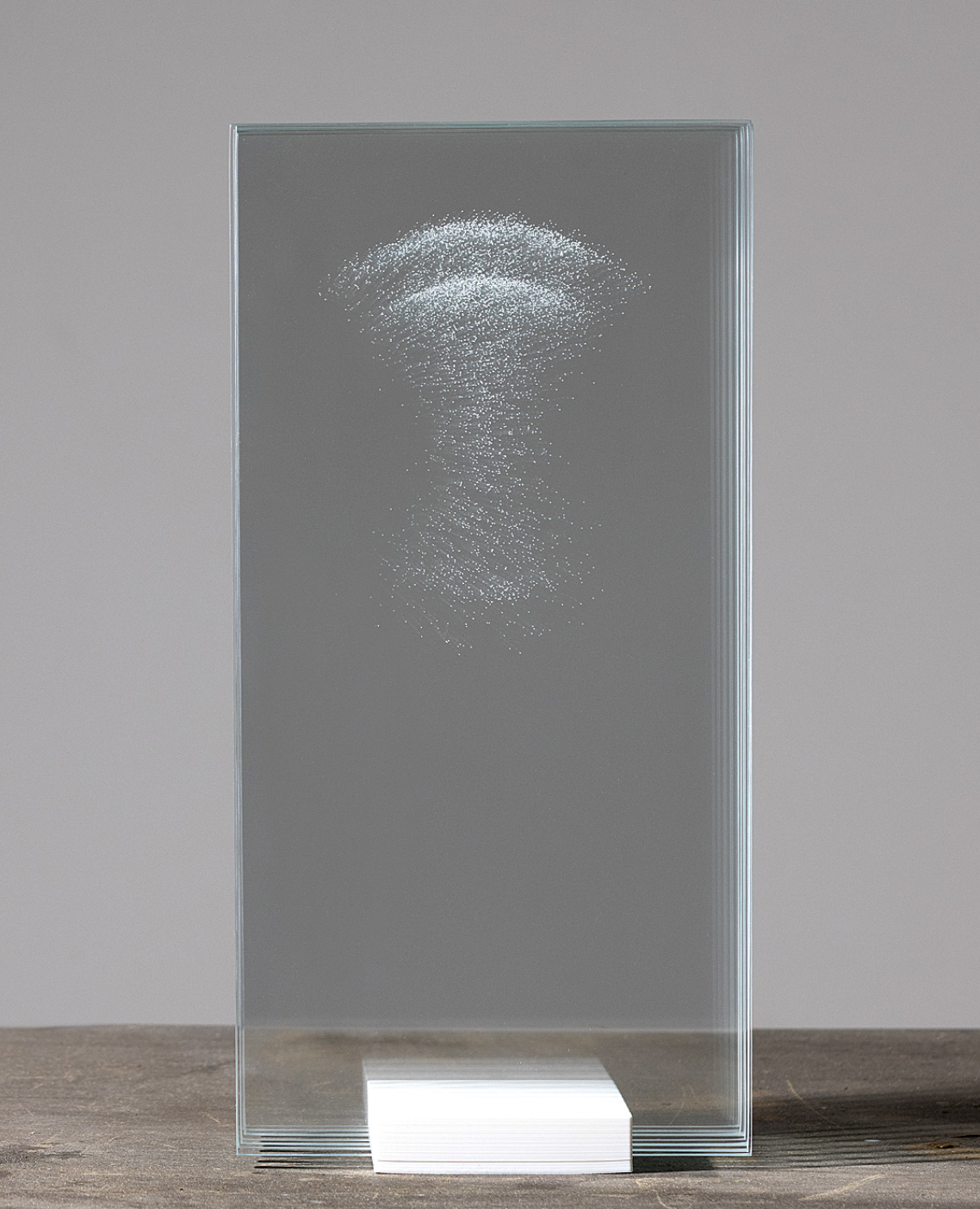
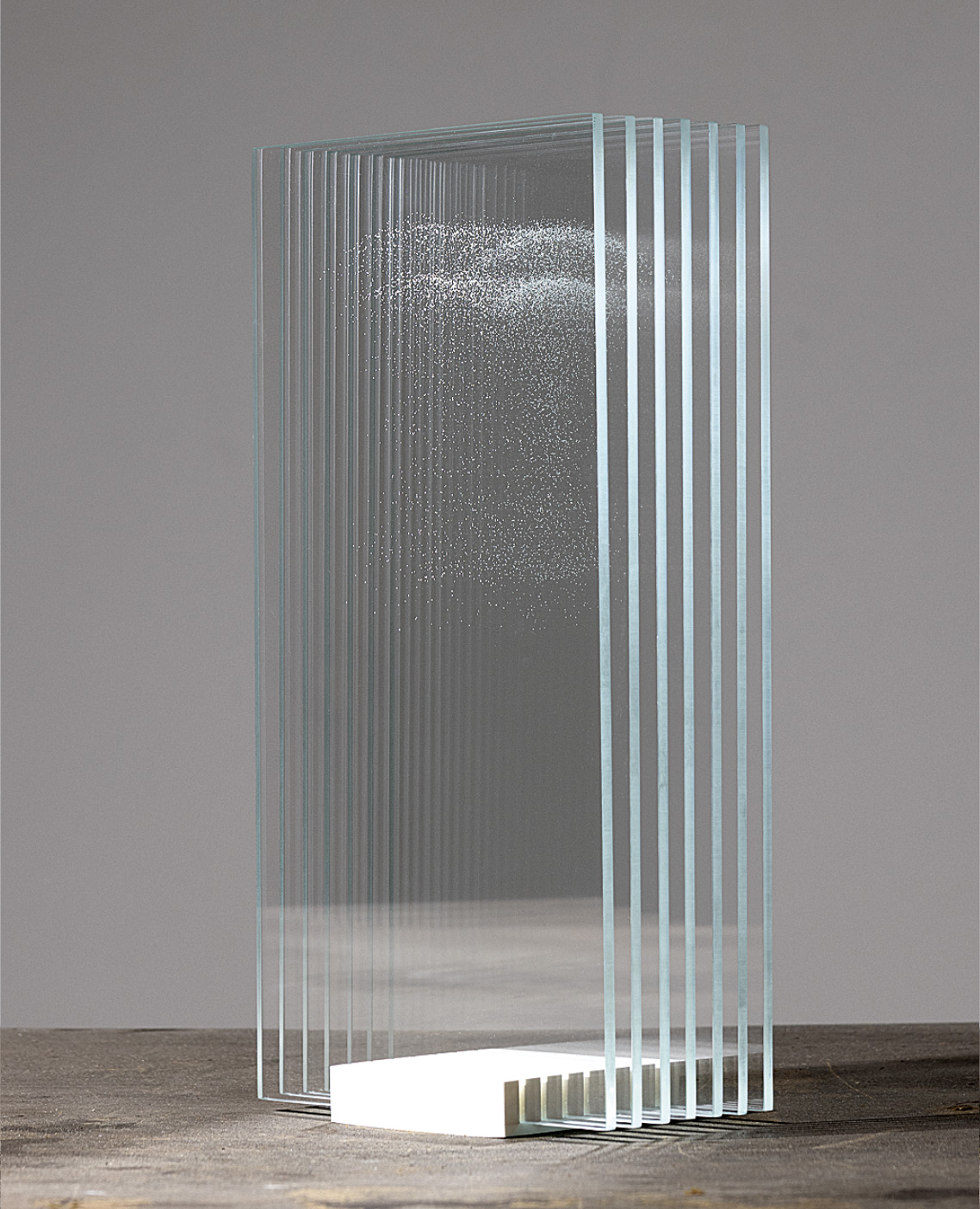
"Orbital Object #1", Engraving on white glass panels,, 20 × 40 × 10 cm, 2025
Orbital_Object_4

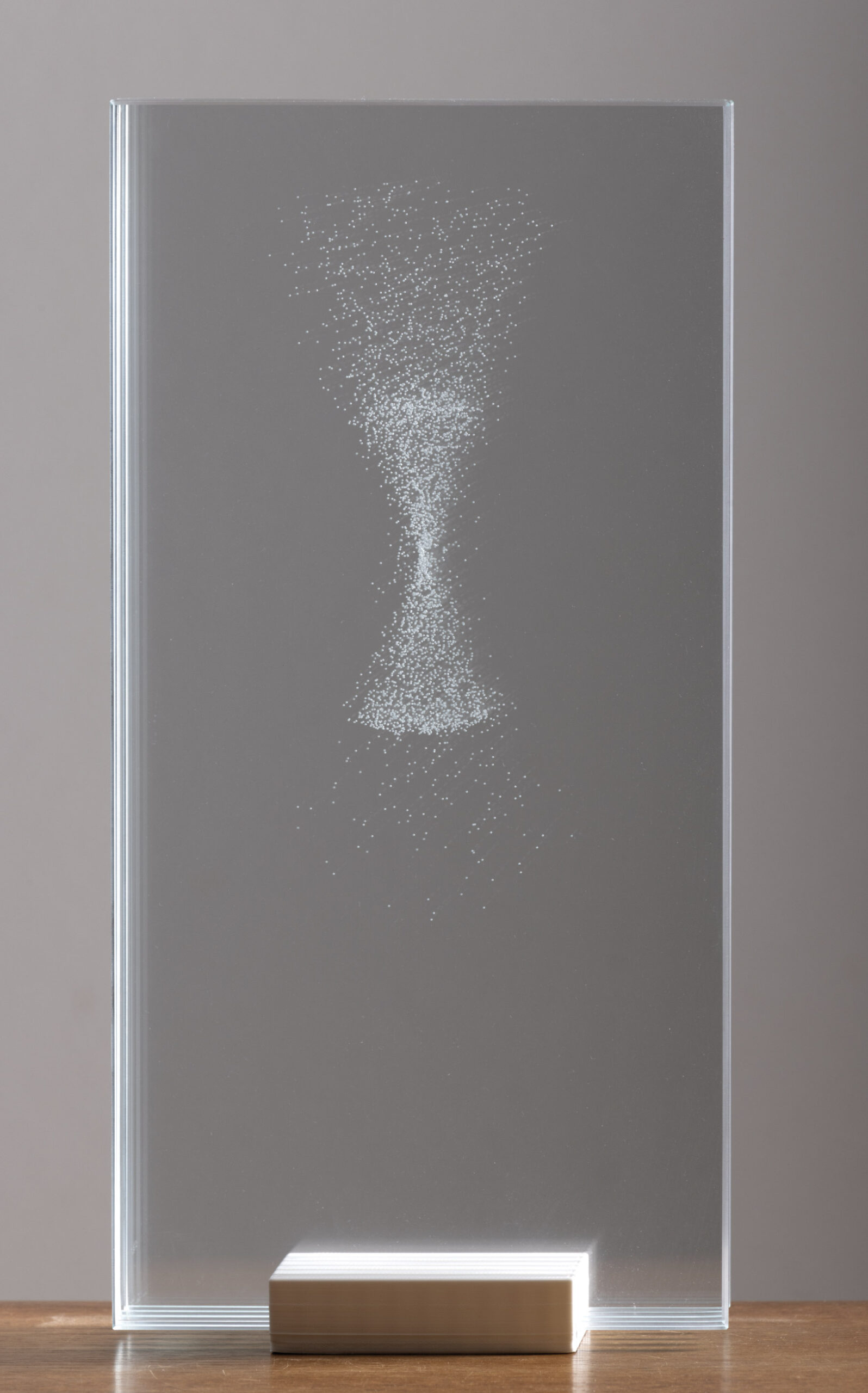
"Orbital Object #2", Engraving on white glass panels, 16 × 32 × 5 cm, 2025

Orbital
Probability clouds

Where does order end, and where does chaos begin? The works of the nine-part series Orbital move within this threshold. Clusters of points condense and dissolve, form segments and scatter again. The structures oscillate between strict geometry and free formlessness. At the center lies the transitional state: a moment in which something is neither clearly ordered nor entirely chaotic. Densities point to possible origins or endpoints. Forms tip between stability and dissolution, between clarity and blur.

The physical models that resonate here stem from a paradigm shift in the description of matter. Instead of clearly defined orbits, early 20th-century physics introduced the concept of probability clouds: diffuse spaces in which electrons exist with certain likelihoods. Matter was no longer understood as a sharply outlined form, but as a condensation of possibilities in space.

Orbital translates this idea into a visual language. The works, realized on engraved black mirrors and layered white-glass panels, show structures that emerge out of apparent chaos – or dissolve back into it. They reveal the passage from one state to another, always suspended between order and indeterminacy.

Stefan Macheiner
Studio: Lederergasse 67, 4020 Linz, Austria
hello@stefan-macheiner.com
Instagram

Join my mailing list – I respect your data (Privacy Policy).